Busy schedules aren't the only reason people don't vote. Many groups lack basic access, including:
Interviews
Open-ended questions designed to surface qualitative insights
Observed gut reactions and emotional responses in real time
Verified that trust and security were top of mind for users, often before usability
Surveys
Quantitative questions that revealed broader voting patterns and preferences
Reached a larger, more diverse audience I couldn't meet face to face
Surfaced demographic trends across a wide range of voter groups
While we needed to account for almost any registered voter with a smartphone, this research allowed us to define three broad user archetypes to help guide our design decisions.
Voting = civic duty
Vote in every election
Tend to be older
Invested in the issues
Technology = untrustworthy
Voting = personal
Vote in some elections
Wide age range
Vote along party lines
Technology = convenient
Voting = optional
Vote if there's time
Tend to be younger
Candidate-based voting
Technology = part of life
Security
Election law
Lack of competitive landscape
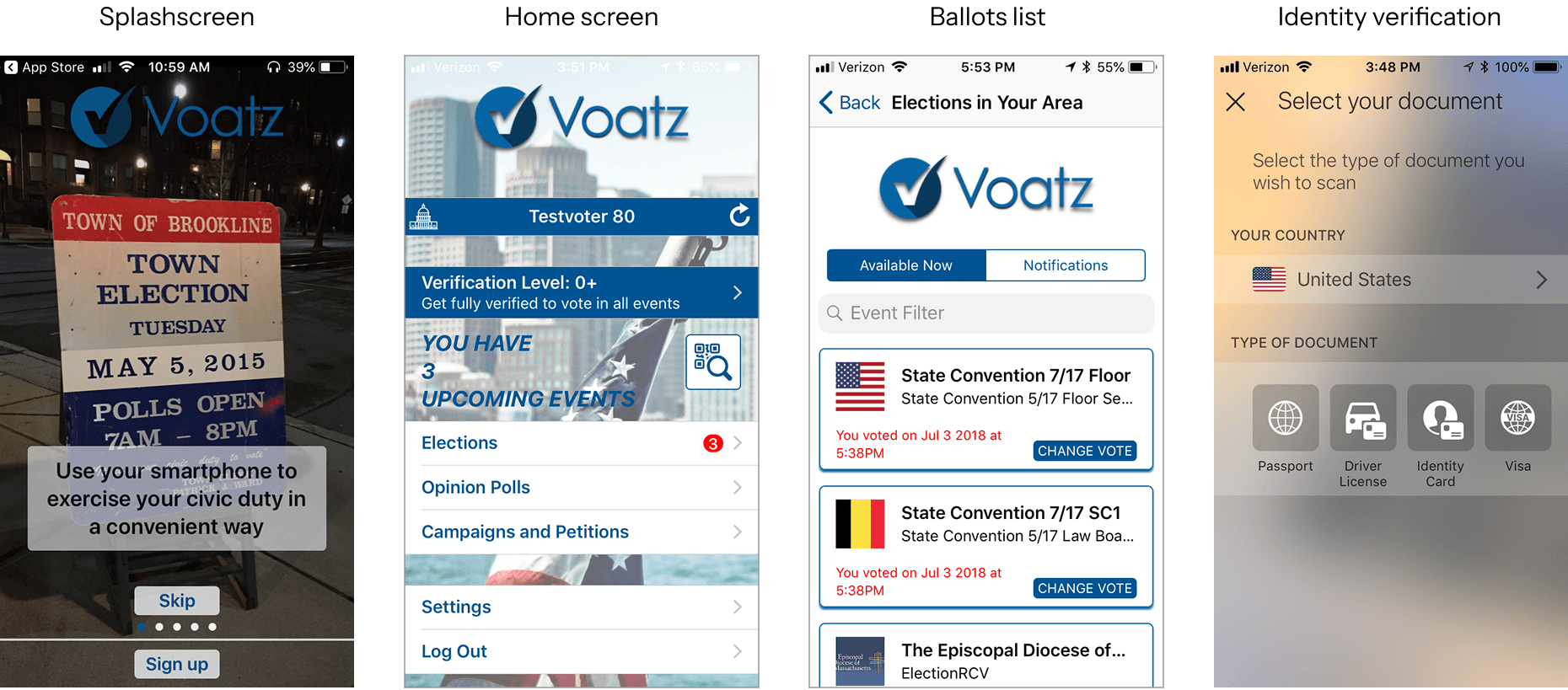
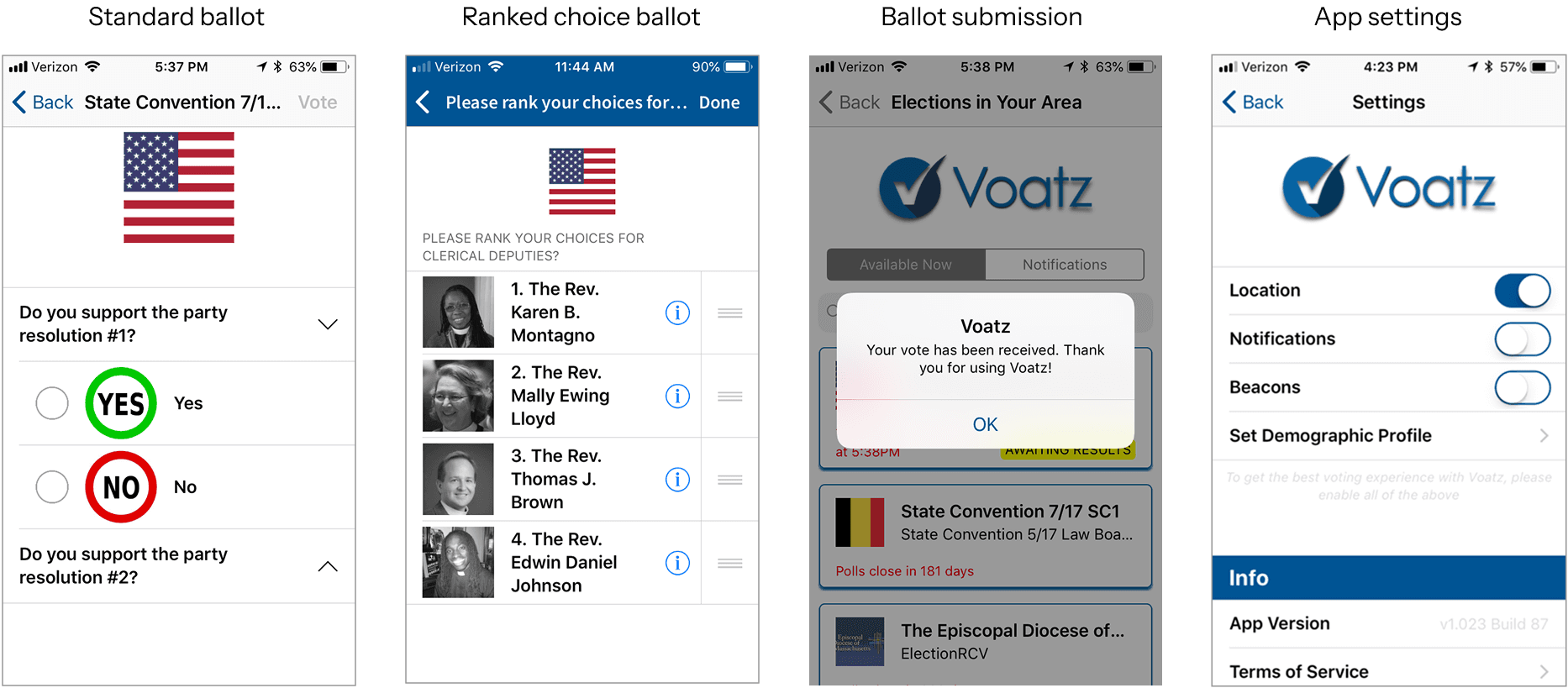
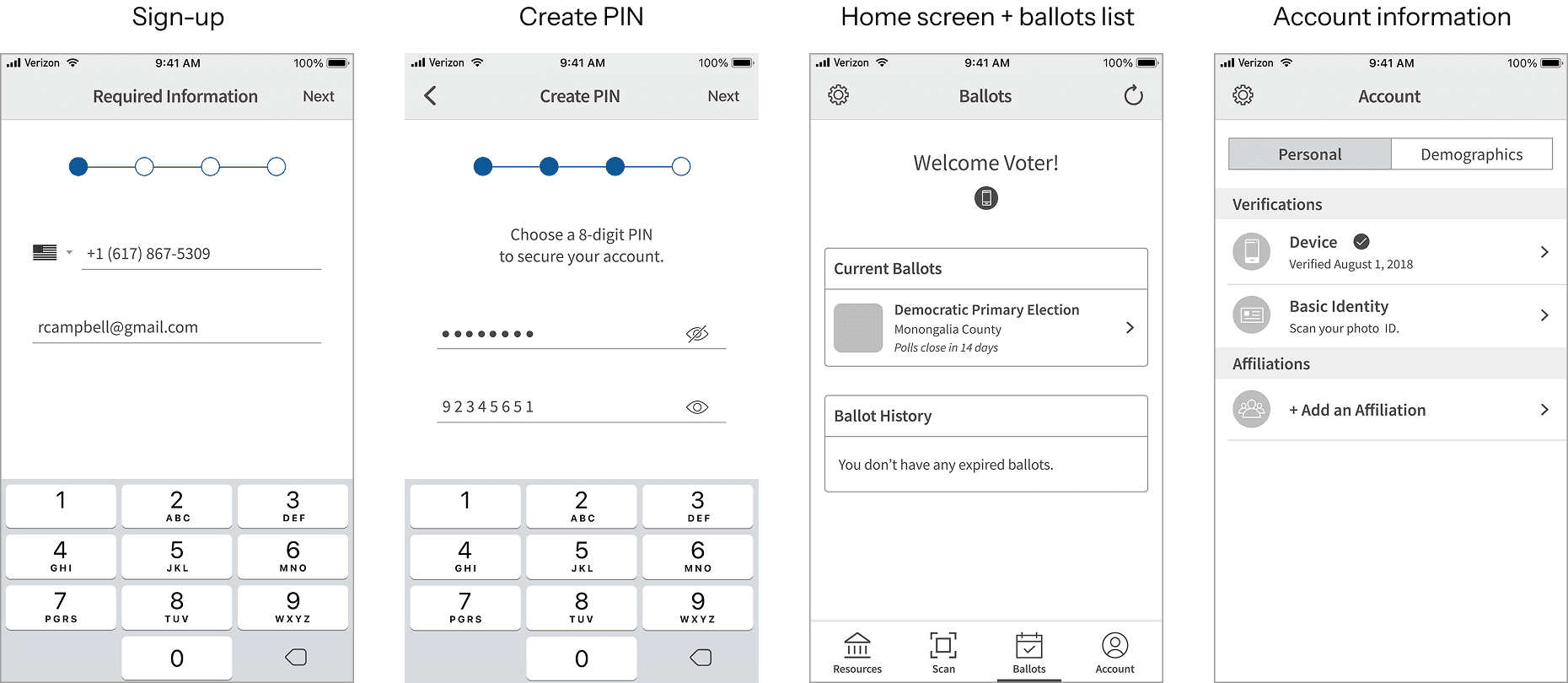
To start, I created wireframes for five essential flows: Sign-up, core navigation, identity verification, voting, and ballot submission. These went through multiple rounds of review, iteration, and stakeholder feedback.
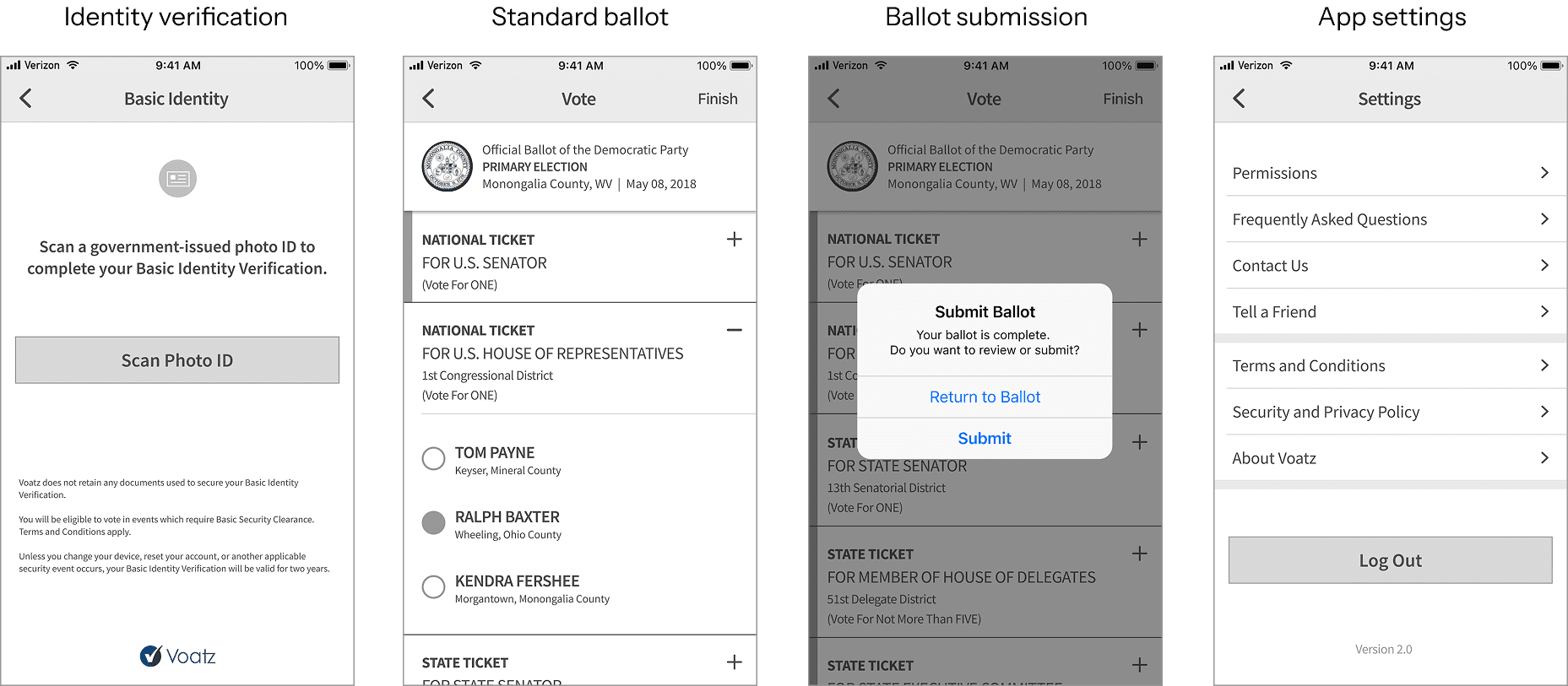
The goal wasn't just to make the app look better, but to rebuild the experience from the ground up with the user at the center. The comprehensive UX overhaul provided:
A defined visual language through clean typography and a streamlined color palette
Structured user flows and information architecture that gave each area of the app a clear purpose
A unified experience that made users feel confident and in control at every step
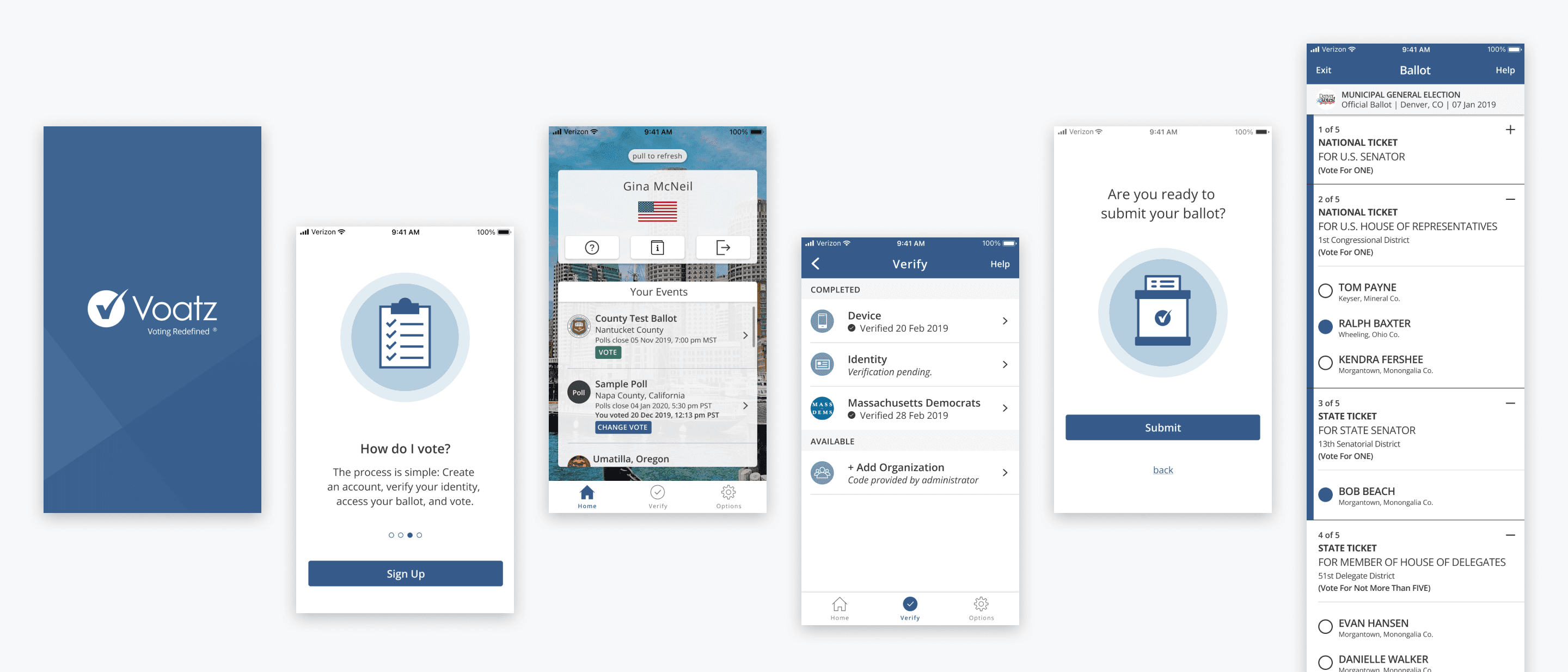
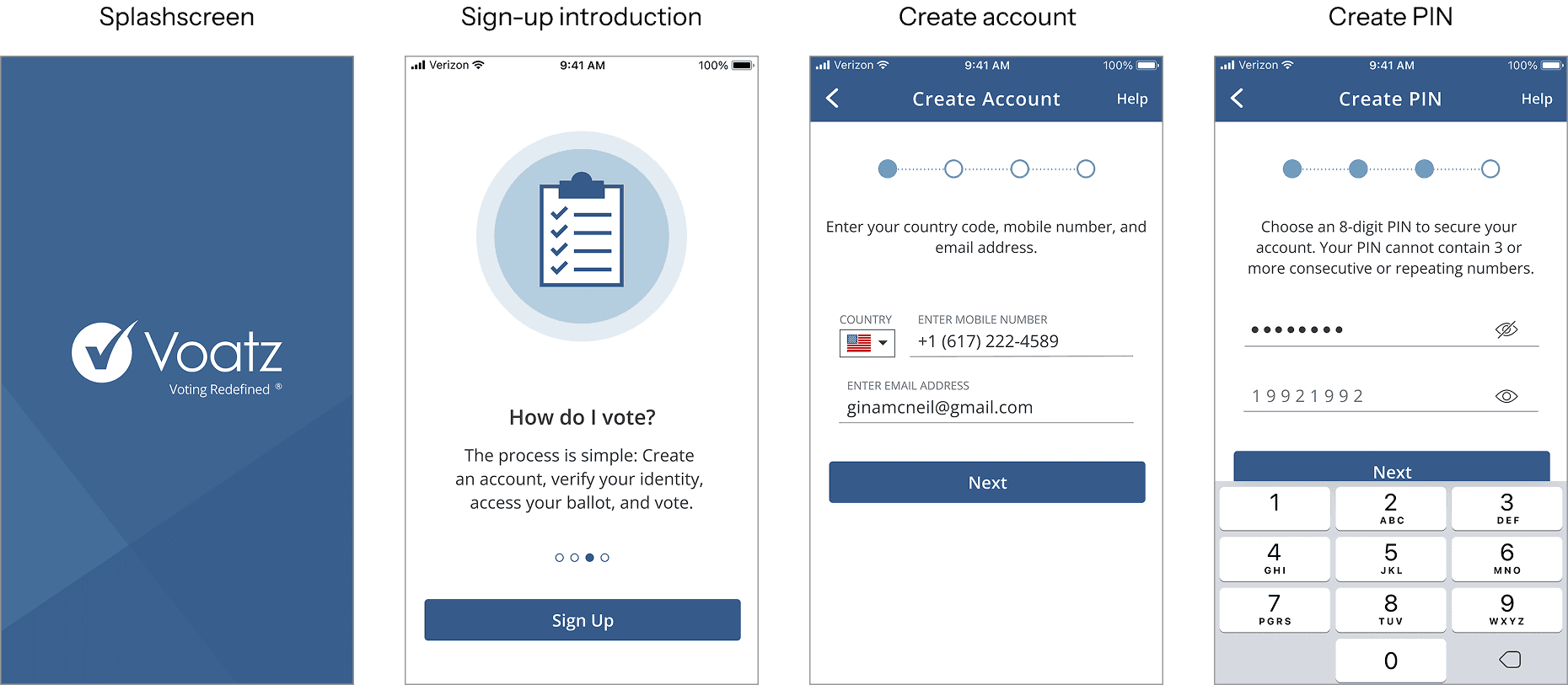
The sign-up flow was designed to set expectations before asking anything of the user. A clean splashscreen and brief introduction established trust upfront, so that by the time voters were creating an account and setting a PIN, they already understood the process and why each step mattered.
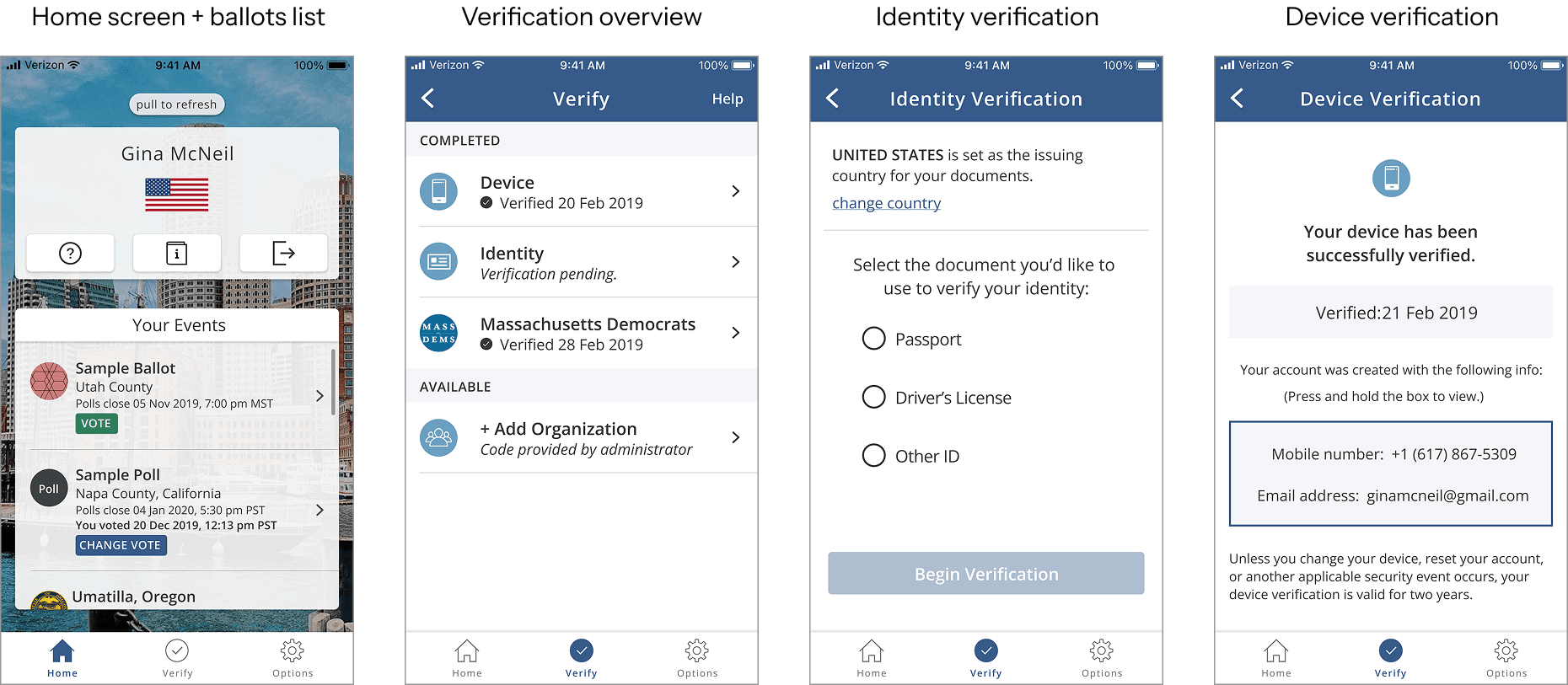
The home screen became the anchor of the app, with available ballots surfaced front and center the moment users logged in. The verification flow was restructured as a transparent checklist, making a multi-step security process feel manageable rather than daunting.
Real ballots are long, unique, and legally specific. The design prioritized clarity and confidence at every step, ensuring voters always knew where they were, what was being asked of them, and that their vote had been successfully cast.
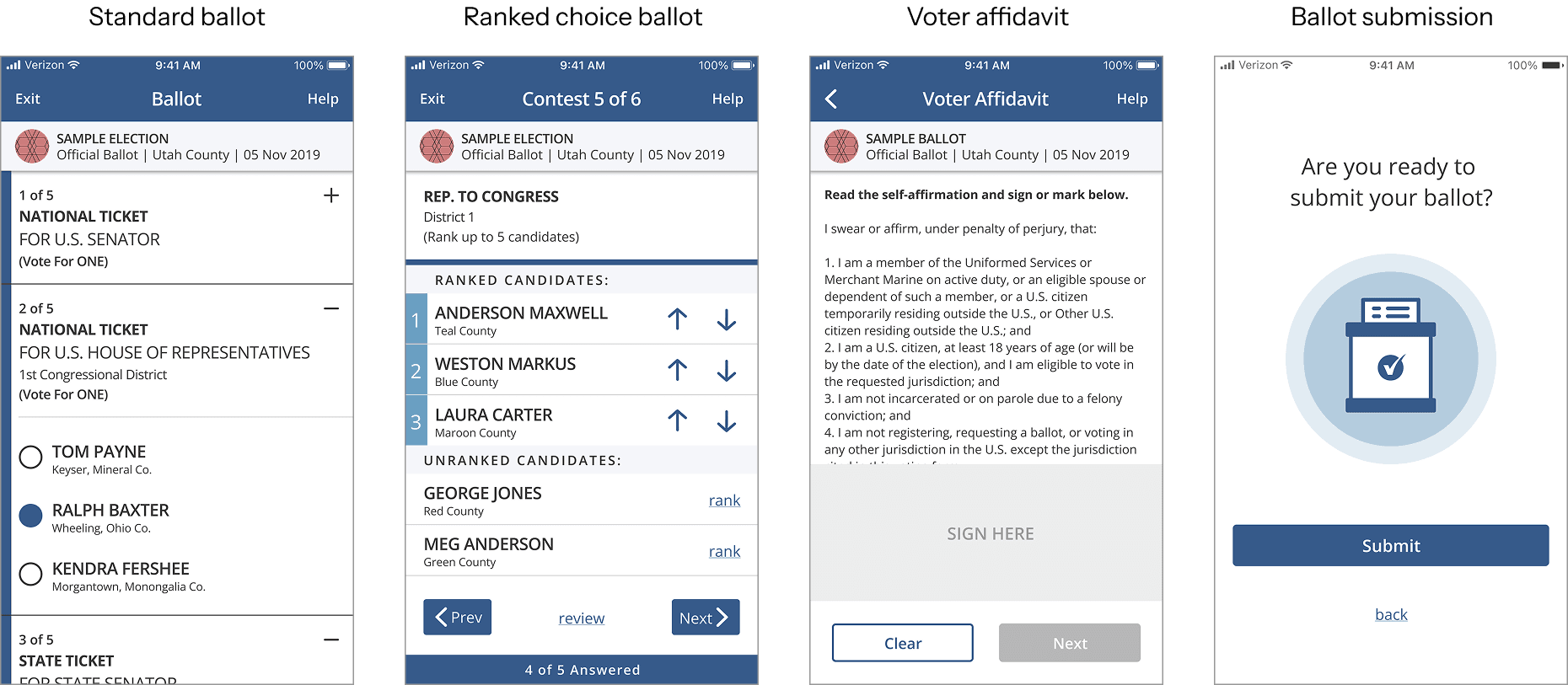
Check out a walkthrough to see how the flows and design decisions come together, from sign-up through ballot submission.
By 2020, Voatz had successfully run 76 elections, and even reached 1.7 million voters in a single election. Pilots spanned state party conventions, state, municipal, and federal elections, international elections, and student government elections.
150 voters in 31 countries
Overseas military/families
Sign-up and registration was easy to maneuver with an ID verification process that gave me confidence that the process was secure. When the ballot was available, I quickly reviewed the candidates and submitted my ballot with Touch ID on my phone. That was it - it was pretty slick!
- Deployed military voter
160 voters in 28 countries
Overseas military/families
We had an excellent experience with the Voatz pilot. We plan to continue offering mobile voting as an option for overseas voters, and potential for voters with disabilities, especially those who are blind or have difficulty handling paper and pens. A mobile voting app could be an important accommodation.
- Julie Anderson, Pierce County Auditor
7,000 delegates voted
93% participation rate
The Voatz platform made possible the remote verification and voting processes for thousands of statewide delegates, allowing them to participate from the ease of their mobile phones… We will look back and see this moment, and our partnership with Voatz, as a turning point for our party.
- Derek Brown, Chairman of the Utah GOP